
Electrical recordingAssesses rhythm and cardiac conduction
Electrocardiogram
A non-invasive test that records the heart’s electrical activity through electrodes placed on the skin and produces a tracing for medical interpretation.
Non-invasiveThe device only records electrical signals
Brief procedureThe recording usually takes only a few minutes
Individualized careGuidance tailored to each patient
What it is
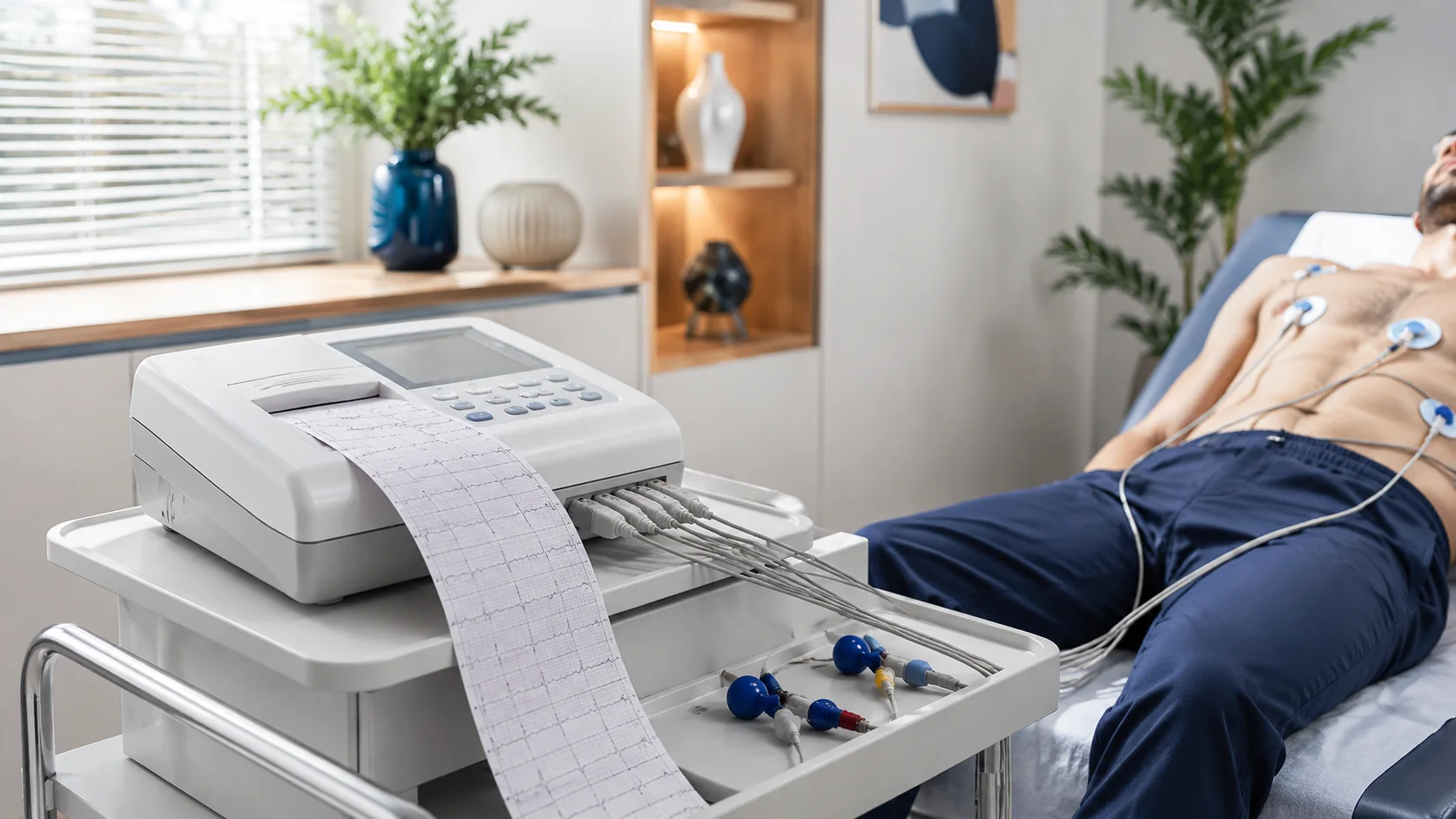
An electrocardiogram (ECG) records the heart’s electrical activity in different leads. Electrodes are placed on the skin and connected to a device that converts the signals into a tracing.
What it is for
It may help assess heart rhythm, rate and electrical conduction and identify findings that must be interpreted alongside symptoms, examination and other clinical information.
How it works
The patient rests while electrodes are placed on the chest and limbs. The machine does not send electricity into the body; it only records signals generated by the heart.
When it may be indicated
It may be requested for palpitations, chest pain or discomfort, dizziness, fainting, rhythm concerns, preoperative assessment or follow-up of cardiovascular conditions, according to medical judgment.
Important information
An ECG is a recording of a particular moment and cannot by itself rule out every cardiovascular condition. Normal or abnormal findings must be interpreted in context.
Practical information
Frequently asked questions
Does an ECG hurt?+
No. It is non-invasive and the electrodes rest on the skin.
Does the ECG machine give an electric shock?+
No. It records electrical activity produced by the heart and does not send current into the patient.
Does a normal ECG mean the heart is completely healthy?+
Not necessarily. ECG is one part of assessment and does not detect every cardiovascular condition in every situation.
Medical guidance
Individual assessment matters
This page is educational and does not replace an individual medical assessment. Tests, treatment and follow-up are defined according to the clinical context. For acute or emergency symptoms, seek urgent care.
Schedule an appointment